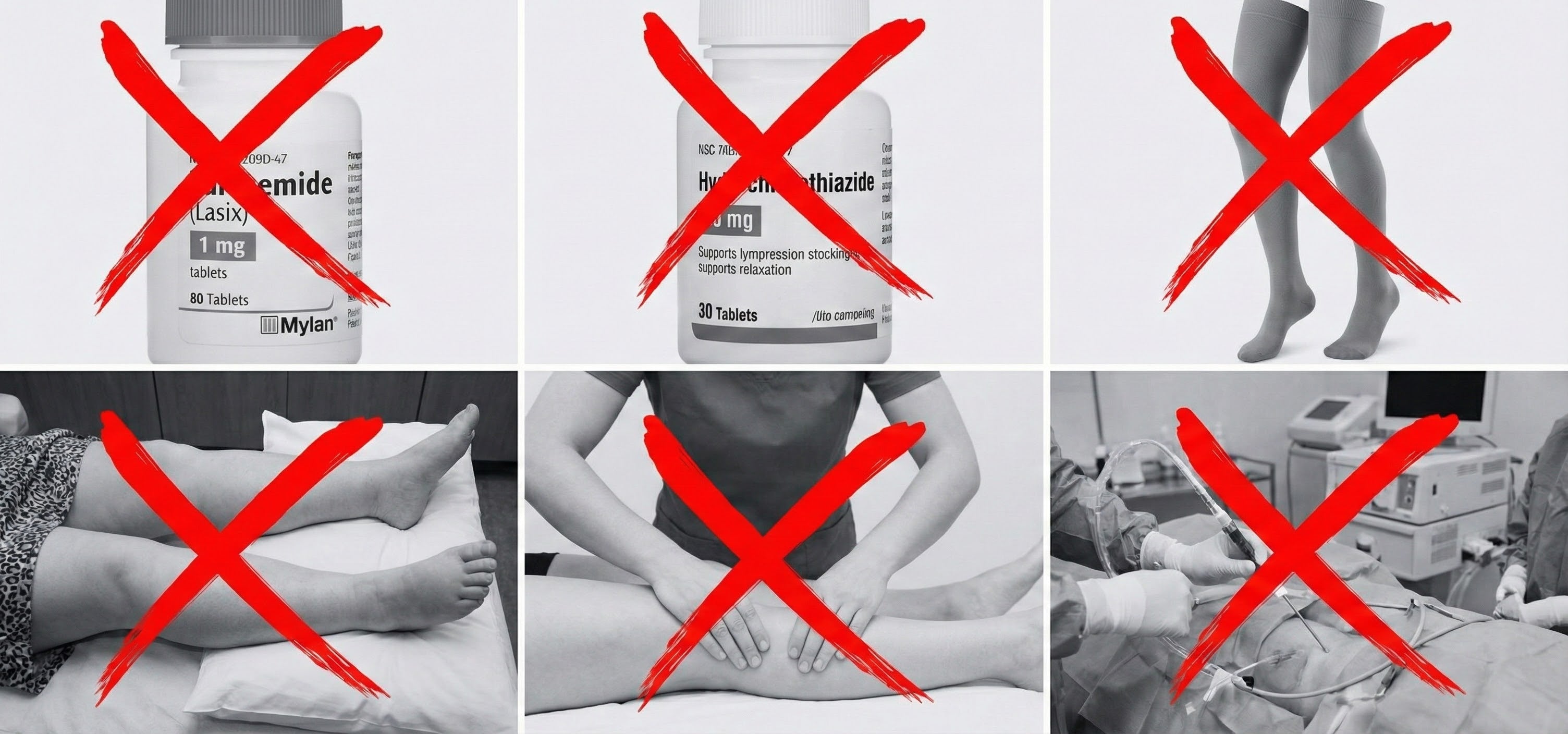
Requirement 1: Valve Restoration — Rhythmic Propulsion
Your leg veins have one-way valves that are supposed to snap shut and stop blood from flowing backward. After decades of gravity, those valves have sprung a leak. Compression socks just hold the leak in place. What you need is rhythmic propulsion — a force that shoots fluid upward faster than gravity pulls it down.
What this means for the device: It must create a sustained, rhythmic squeeze-release cycle — not static pressure like a stocking.
Requirement 2: Neuromuscular Activation — Motor Nerve Recruitment
Your Second Heart isn’t just weak. It’s dormant. Because your legs hurt, you move less. Because you move less, the pump atrophies. Vicious cycle. You need to jumpstart the engine — not by forcing yourself to walk through pain, but by recruiting the motor nerves directly. Pills can’t do this. Generic vibrating massagers can’t either — they shake the skin but don’t penetrate deep enough.
What this means for the device: It must use true EMS (electrical muscle stimulation) that reaches the motor nerves and forces the calf muscles to contract involuntarily. Not vibration. Not massage. Actual neuromuscular activation.
Requirement 3: Lymphatic Flush — Rhythmic Oscillation
The fluid leaking from your veins is overwhelming your lymphatic drainage system. The drain is clogged. Static compression — socks just squeezing constantly — doesn’t move sludge. You need rhythmic oscillation: a squeeze-release cycle that physically pumps the lymphatic channels.
What this means for the device: It must create oscillating contraction patterns that move lymph fluid, not just venous blood. This is why constant-pressure garments fail — they squeeze but don’t oscillate.
Dr. Reid tested eleven devices after Phoenix. Every single one failed at least one requirement. Most were surface vibrators that couldn’t reach the motor nerves. Others lacked rhythmic oscillation. The rest couldn’t generate enough force to contract the calf muscle.
Only one device passed all three.